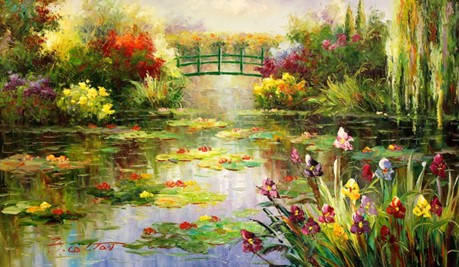

The water lily, a captivating aquatic plant, flourishes in ponds and streams, boasting a rich history intertwined with religious beliefs and folklore. This member of the Nymphaeaceae family, derived from the Greek word for "nymph," symbolizes the guardians of springs and rivers, making its name particularly apt. With roots anchored deep in the sediment and broad leaves, known as lily pads, floating gracefully on the water's surface, the water lily showcases stunning flowers that can rise above the pads, displaying a vibrant array of colors across more than 70 species.
In ancient Egypt, the blue water lily, or Nymphaea caerulea, held profound significance, believed to be the birthplace of the sun god Nefertem, who emerged from its petals amidst the chaos of creation. The introduction of water lilies to England in the early 1800s marked a new chapter, as noble gardens began to cultivate these exquisite plants. The first hybrid, Nymphaea devoniensis, was serendipitously discovered by gardener Joseph Paxton in the Duke of Devonshire's glasshouse, resulting from the self-pollination of the red water lily. This innovation paved the way for further hybridization, with Edmund Sturtevant developing the first hybrids in the United States in 1876, expanding the allure of water lilies across the globe.
Claude Monet, the renowned French painter, is best recognized for his captivating depictions of water lilies. He lived in Giverny, France, where he created a picturesque garden featuring a water lily pond and a charming Japanese bridge. Monet produced numerous works centered around this bridge and painted nearly 250 variations of the water lilies, with some displayed in museums and others held by private collectors.

A common misconception is that water lilies and lotus flowers are the same, but this is incorrect. Although the Egyptian blue water lily is often referred to as a lotus, it belongs to the water lily family. In contrast, the true lotus flower is part of the Nelumbo family and is indigenous to India, where it serves as the national flower. The distinction between the two can be observed in their leaves: water lily leaves float on the water's surface, while lotus leaves rise above it.
The Water lily has blossomed in the human imagination across millennia. Its rich legacy endures today, not just in art and literature, but as a living bridge to our ancestors, reminding us that natural wonders are eternal.
Shop water lilies at Tricker's - America's Oldest Water Garden