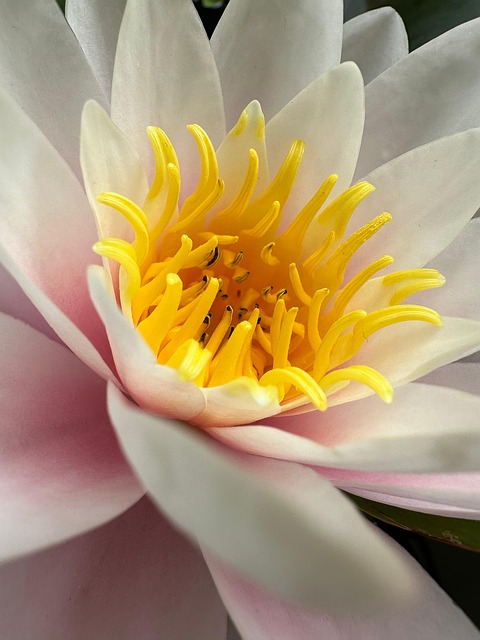

Water lilies gracefully float on the surface of ponds, embodying not only beauty but also a fascinating complexity. Each flower consists of three essential components: the perianth, stamen, and pistil, all of which collaborate harmoniously to ensure the plant's survival and aesthetic appeal. This intricate design highlights the remarkable adaptability of water lilies in their aquatic environment.
Let's take a closer look...
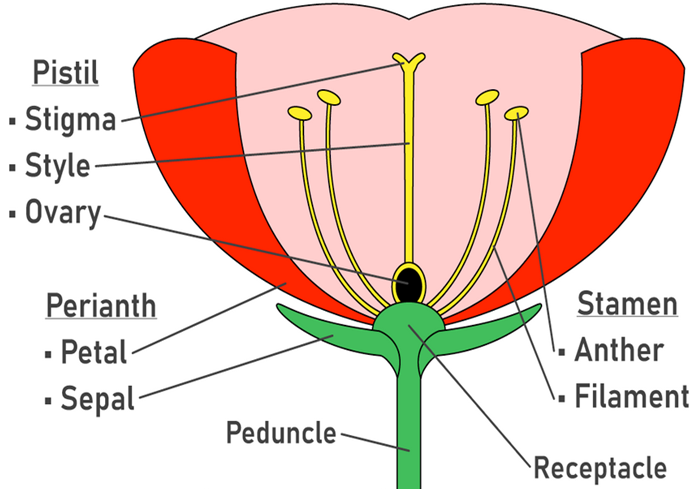
The PERIANTH is the outer layer of the lily flower, comprising both sepals and petals. These vibrant and often fragrant components serve to attract pollinators, with sepals typically being green and protective of the budding flower, while the petals are the strikingly colorful parts that entice insects and birds for pollination.
Nestled within the perianth are the flower's sexual organs, including the STAMEN, the male reproductive structure, and the pistil, the female counterpart. The stamen is made up of a filament and anther, where pollen is generated, whereas the PISTIL consists of the ovary and stigma. The ovary houses the ovules, which are the female reproductive cells, and after pollination, it transforms into a fruit containing the seeds of the lily. The style, a slender extension of the pistil, connects the ovary to the stigma and facilitates the movement of pollen for fertilization, often featuring tiny hairs that help capture pollen grains.
In essence, the structure of the lily flower is intricately designed for reproduction, with the perianth attracting pollinators and the internal organs working together to ensure the continuation of the species
Every part of a water lily, from the root to petal, is a masterpiece of adaptation, working together to float, feed, and flourish, transforming a simple pond into a vibrant living spectacle.
Shop our Water Garden Plants at tricker.com